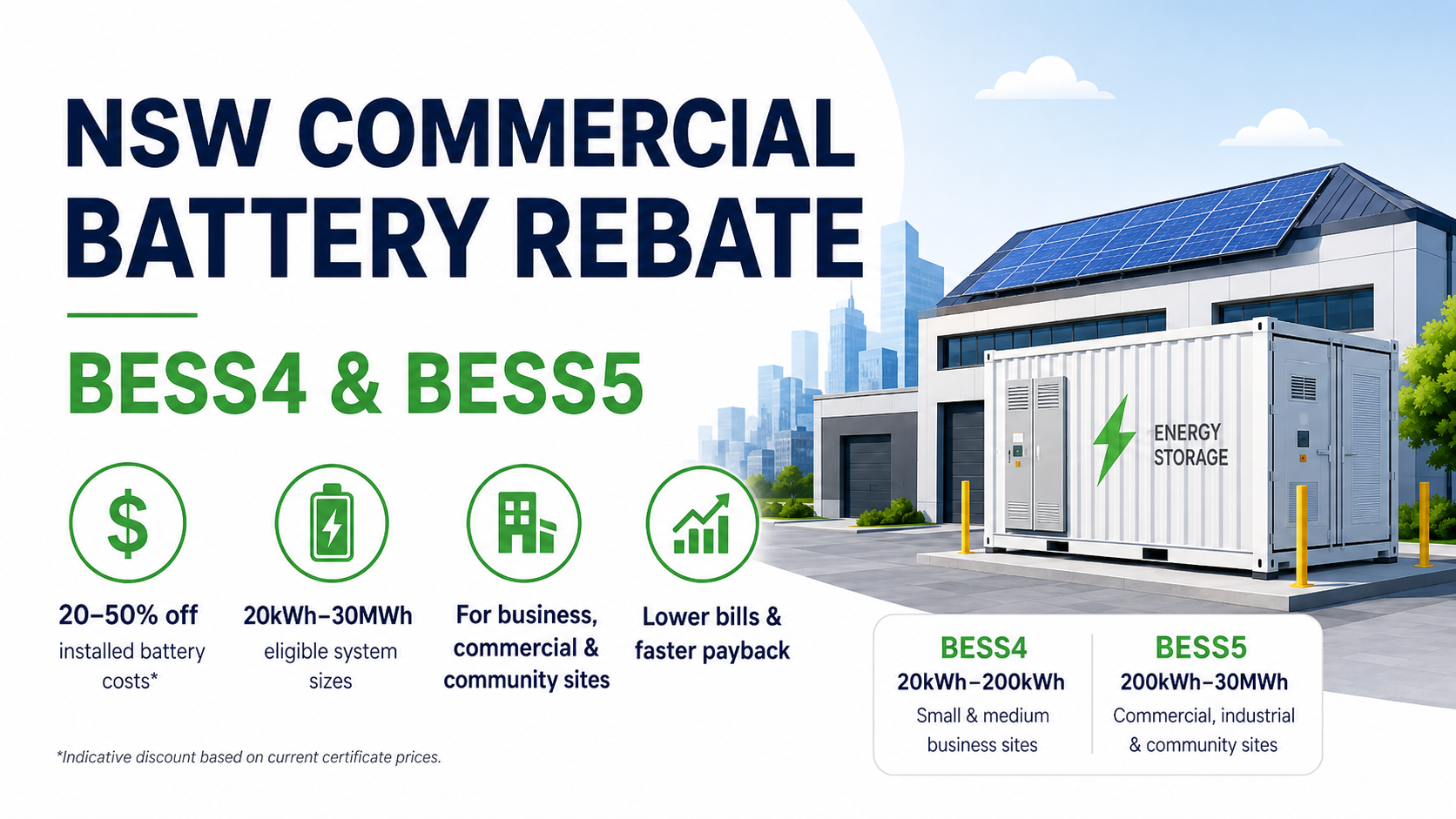
Australian businesses are increasingly turning to battery energy storage systems (BESS) to manage electricity demand, improve energy efficiency and make better use of renewable energy. For small and medium businesses in New South Wales, the BESS4 rebate provides an opportunity to access incentives when installing an eligible battery system.
BESS4 is part of the NSW Peak Demand Reduction Scheme (PDRS) and is scheduled to commence on 1 September 2026. The activity is designed specifically for small and medium businesses and covers battery systems with a combined usable capacity greater than 20 kWh and up to 200 kWh. This makes BESS4 particularly relevant for businesses considering battery systems in the 30–200 kWh range.
What Is the BESS4 Rebate?
BESS4 is a battery incentive activity under the NSW Peak Demand Reduction Scheme. Eligible projects can generate Peak Reduction Certificates (PRCs) based on their capacity to shift electricity demand away from peak periods.
For a business investing in a 30–200 kWh battery system, the incentive can help reduce the effective upfront cost of the project. The actual incentive depends on the system configuration, battery capacity, inverter capacity and applicable PDRS calculation methodology.
BESS4 is not simply a standard cash rebate. The incentive is associated with PRCs created through the scheme, so businesses should have their project assessed to determine the potential value available.
Who Can Apply for BESS4?
BESS4 is intended for eligible small and medium businesses. The battery cannot be installed in a residential building or data centre. The installation must also meet the relevant PDRS eligibility, equipment and implementation requirements.
For businesses considering a 30–200 kWh system, checking eligibility before purchasing equipment is important. A system that does not meet the scheme requirements may not qualify for the incentive.
Why Consider a 30–200 kWh Battery?
A battery in the 30–200 kWh range can be suitable for businesses with moderate to substantial electricity consumption. Depending on the business’s energy profile, battery storage can help shift electricity use away from periods of high demand.
For example, a business can store excess solar energy generated during the day and use that stored electricity later when solar generation falls. A battery can also be strategically discharged during peak periods to support better energy management.
Potential benefits include:
Better use of onsite solar generation
Reduced reliance on grid electricity during peak periods
Improved energy management
Greater control over electricity consumption
Potentially lower operating costs
Access to eligible PDRS incentives
Solar and Battery vs Battery-Only
Businesses can consider either a battery-only system or a combination of solar PV and battery storage.
A battery-only system may suit a business that already has solar panels or wants to focus on storing and shifting electricity.
A solar-plus-battery system can provide additional benefits by generating renewable electricity onsite and storing surplus energy for later use.
Under BESS4, the applicable incentive calculation can be more favourable where new solar PV is installed, subject to the relevant requirements. This makes solar and battery integration worth considering when planning a new commercial energy system.
BESS4 Equipment and Installation Requirements
Eligible battery systems must meet the equipment requirements specified under the PDRS. Current NSW information states that BESS4 batteries must have a combined usable capacity greater than 20 kWh and no more than 200 kWh, meet specified requirements relating to inverter output, warranty and connection, and be listed on the Clean Energy Council’s approved battery list.
Installation must also be carried out by an installer on the Solar Accreditation Australia installer list, with the system installed in accordance with AS/NZS 5139. Required planning and network approvals must also be obtained.
This means businesses should not select a battery based solely on price or capacity. Equipment compliance and professional installation are essential when an incentive is involved.
When Does BESS4 Start?
BESS4 is scheduled to commence from 1 September 2026. It forms part of three new NSW PDRS battery activities introduced from that date, alongside BESS3 for apartment buildings and BESS5 for larger commercial and industrial battery projects.
Businesses planning a 30–200 kWh battery installation should therefore begin assessing their energy consumption, solar generation, battery requirements and project approvals well before installation.
Choose OZ Smart Energy for Your Battery Project
Selecting the right battery requires more than choosing a particular capacity. Your electricity usage, solar generation, peak-demand patterns, inverter requirements, available installation space and future energy needs should all be considered.
OZ Smart Energy can help NSW businesses explore suitable solar and battery solutions for their individual requirements. Whether you are considering a 30 kWh, 50 kWh, 100 kWh, 150 kWh or 200 kWh battery system, professional system design can help you understand the available options and potential incentives.
If your business is considering the BESS4 rebate in NSW, speak with OZ Smart Energy about designing a compliant commercial battery solution that can support your energy and cost-saving goals.